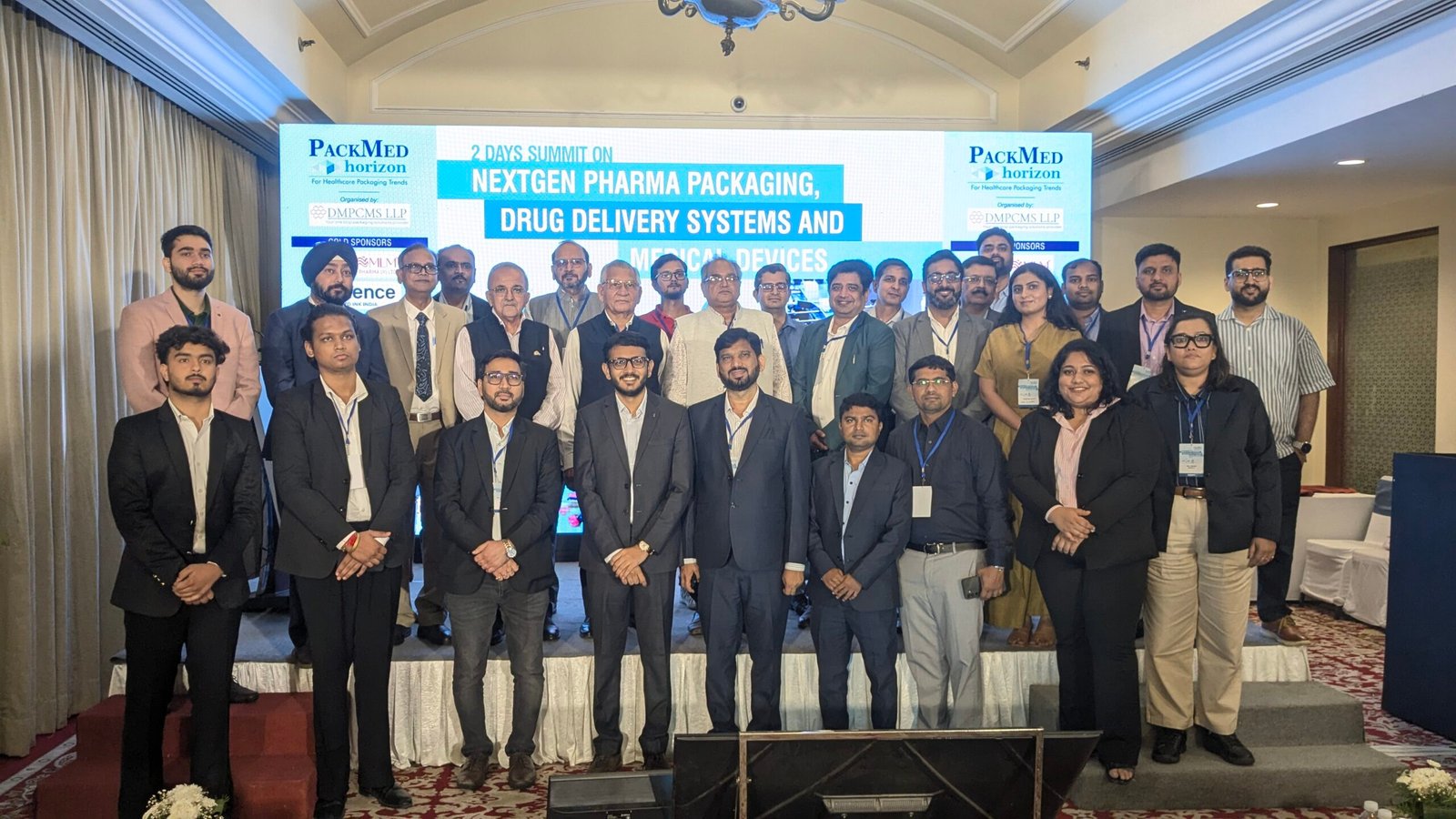
Discussions on the second day of the two-day NextGen Pharma Packaging, Drug Delivery System and Medical Devices Summit evolved around the changing role of pharmaceutical packaging, with experts examining barrier technologies, regulatory compliance, patient-centric design, digitalization, traceability, sustainability and innovations in secondary and tertiary packaging.

The key inference was that pharma packaging is moving beyond its traditional role of containing and protecting medicines to becoming an active part of product safety, patient communication, supply-chain efficiency and healthcare delivery.
The day opened with a technical discussion by Kirtiraj K Gaikwad, associate professor, paper and packaging, IIT Roorkee, on building barrier properties in paper for pharmaceutical packaging. Barrier performance is important for pharma products because oxygen, moisture and light can directly influence product stability and shelf life, he said. While paper has advantages, including opacity and protection against light, its porous structure creates challenges in achieving adequate oxygen and moisture barriers.
Research is moving towards coatings, fiber-network modification and multi-layer structures to improve paper’s performance. Strategies include densifying the fibre network, sealing the surface, and adding hydrophobic properties. Coatings based on materials such as PVA, starch and nanocellulose are being explored, while oxygen scavengers and antimicrobial functionality could add further performance benefits, he explained.The discussions on next-generation packaging emphasized the need for inclusive designs that account for the elderly and visually impaired users. Examples included stronger color contrast for readability and tactile features on closures for visually impaired consumers. Packaging, the discussion suggested, must communicate not only what a product is but on how it should be used.
Packaging’s role in modern pharmaceutical ecosystem evolved from conventional packs to prefilled syringes, auto-injectors, pen injectors and connected devices. The discussion highlighted how packaging and delivery systems support self-administration, patient convenience and medication adherence. Connected devices can generate usage information, while digital health platforms are opening new possibilities for interaction between patients, products and healthcare systems.
This evolution was captured well in the discussion on commercial excellence, which contrasted the traditional packaging model, The latter seeks to improve patient experience, accelerate launches, strengthen supply security and create competitive advantage. In this view, packaging can directly influence business outcomes as well as patient outcomes.
Regulation and GMP provided another major focus. Kshitij Joshi, technical packaging lead, South Asia, Haleon India, described pharmaceutical packaging as more than a decorated container or final manufacturing step. “We are discussing a critical quality control system,” he said, stressing a pack must protect the formulation throughout its shelf life, communicate information for safe use and provide evidence that packaging activities were conducted under controlled conditions.
Joshi emphasised that OTC packaging in India must address several intersecting requirements covering drug regulations, GMP, labelling, advertising, environmental compliance and extended producer responsibility. With consumers increasingly making independent product choices, packaging must support a safe and informed self-selection process rather than simply accommodate mandatory text.
Traceability and authentication were addressed during a discussion on new technology in pharma packaging. Sandeep Solanki, general manager, CK Zipper, described QR-code-based traceability extending from batch production and packing through the supply chain to the end user, with the possibility of patients accessing information such as batch details and certificates of analysis.
Amit Kumar Garg, director-operations, AIDC Solutions and Research Foundation, added a patient-centric perspective, noting consumers increasingly expect information about a product’s identity, authenticity, expiry and recall status. He argued that the burden of authentication should not simply be transferred to the patient; the pharmaceutical supply chain, regulators and other stakeholders need to create an ecosystem in which the patient is the beneficiary.
Sustainability extended beyond primary packaging into distribution. Bernard Dominici, director commercial and co-founder, Durrenberg, discussed secondary packaging and transport efficiency, emphasizing that sustainability has to operate alongside stringent regulation, reliable delivery and profitability. He highlighted measures such as reducing packaging height, minimizing cushioning and using warehouse-management data to identify shipments that require additional protection.
The importance of tertiary packaging was reinforced by Kieran of Item Products, who argued that outer packaging deserves greater attention because pharmaceutical products can face multiple opportunities for damage during distribution. He said, “Tertiary packaging deserves more attention,” noting that relatively small components can improve handling, protection and functionality while also contributing to sustainability.
Day 2’s discussions presented a broad picture of pharmaceutical packaging in transition—from barrier paper and sustainable materials to connected delivery systems, GMP, authentication, inclusive design and automated distribution. Rather than treating packaging as an isolated component, the discussions positioned it as an integral part of the pharmaceutical product, supply chain and patient experience.