How can findings from sports medicine and science be translated more quickly into prevention, diagnosis, treatment and rehabilitation? And what role do wearables, artificial intelligence, modern performance diagnostics and new approaches to personalized medicine play in this?

The 14th Medica Medicine + Sports Conference will address these questions on 18 and 19 November 2026 and, for the first time, will take place directly in Hall 4 – right at the heart of the Medica exhibition in Düsseldorf (Medica 2026 dates: 16–19 November).

The new venue for this high-profile sports medicine conference forms part of Medica ’s strategic development. Scientific exchange and knowledge transfer will be specifically interwoven with concrete Medica l technology innovations and their practical application. Its immediate proximity to the Medica Sports Hub , guided innovation tours to exhibitors and additional masterclasses ensure short distances between the conference, product demonstrations and professional dialogue.
“In doing so, we are consistently further developing one of Medica ’s established conference formats: the path leads directly from scientific discussion to technologies and applications that are already making new care concepts possible today,” explains Carmen Berger, the Messe Düsseldorf representative responsible for Medica (and the parallel supplier platform Compamed).
From space to the prevention of neurological diseases
ESA astronaut Dr Matthias Maurer will kick off the conference with his opening keynote on Wednesday, 18 November, at 1 pm. The participant in the ISS mission “Cosmic Kiss” will provide insights into the physical and mental demands of space travel.
The focus will then shift to the link between physical activity, brain function and healthy ageing. The session, chaired by Prof. Bettina Wollesen, will examine both the optimisation of cognitive performance in elite sport and the prevention of neurodegenerative diseases.
Professional beach volleyball player and psychologist Dr Sandra Ittlinger will speak about brain training in competitive sport. Prof. Thorben Hülsdünker from Linex University will demonstrate how neurophysiological training methods can influence sporting performance. Prof. Nadja Schott from the University of Stuttgart will explore the links between physical activity, mental performance and healthy ageing.
The session will conclude with a presentation by Prof. Stefan Isenmann, Head of the Neurology Department at St Josef Hospital in Moers and Chair of the Stroke Prevention Commission. He will speak about the prevention of neurovascular and neurodegenerative diseases. An additional masterclass will explore new findings on the primary prevention of strokes through exercise, sport, nutrition and lifestyle.
Longevity: What can nutrition and supplements achieve?
Another key focus is the rapidly growing field of longevity. The session ‘Longevity boosters – Deep-diving into the world of nutrition and supplements’ takes a critical look at dietary supplements and the scientific evidence supporting them.
Dr Lutz Graumann, a specialist in sports medicine, chiropractic and nutritional medicine, analyses the booming supplement market in a talk entitled “What works, what doesn’t – and who paid for it?”. Dr Wolfgang Brysch, CEO of iuLabs GmbH, discusses natural ingredients and mitochondrial functions. Juliane Kupfer, Head of Performance Nutrition at MYOS Sport & Health, presents findings from long-term studies of elite athletes.
Ashley Anderson, an international expert in sports pharmacy and anti-doping, will then present key findings from the 6th International Sports Pharmacy Symposium.
From the conference straight to the innovations
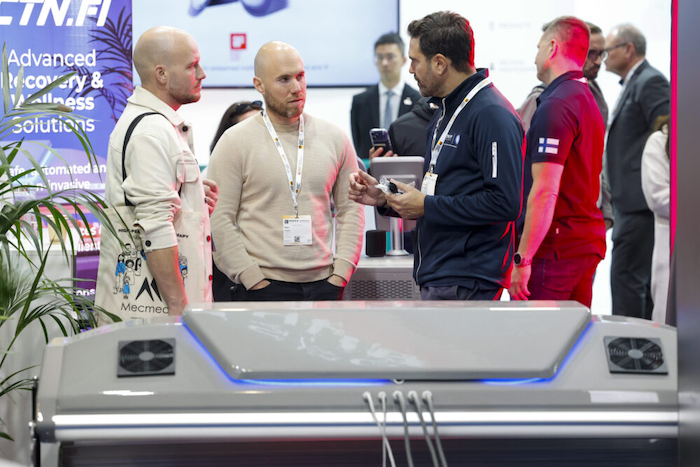
Just how effectively Medica 2026 bridges the gap between science and practical application becomes clear immediately after the sessions: conference participants move on to a guided innovation tour of the WT Wearable Technologies Show in Hall 12 and the Medica Sports Hub in Hall 4.
There, the topics discussed are transformed into concrete products and applications. Wearables, sensor technology, training and diagnostic solutions can be experienced first-hand and, in some cases, tested by participants themselves.
It is precisely this connection that characterizes the conference’s repositioning: scientific findings do not remain confined to the conference room, but are brought together with technologies, companies and specific application scenarios.
Exercise on Prescription: From Scientific Evidence to Clinical Practice
The second day of the conference begins with ‘Exercise is Medicine – Implementing international best practice’. Prof. Jürgen Steinacker from Ulm University Hospital and President of Exercise is Medicine Europe will discuss how exercise can be more closely integrated into medical practice as an effective tool for prevention and health promotion.
Prof. Mats Börjesson will present the findings of the Swedish long-term study ‘Physical activity on prescription’. Prof. Yannis Pitsiladis from Hong Kong Baptist University will examine the role of technology in promoting physical activity.
Prehabilitation will also be discussed: this involves preparing patients physically, nutritionally and psychosocially prior to planned operations or strenuous treatments, in order to increase their functional reserve and support their recovery following a procedure.
Obesity, weight-loss injections and exercise
The session ‘The Obesity Epidemic – Understanding and Addressing Challenges’ brings another topical healthcare issue into focus. Prof. Christine Joisten from the German Sport University Cologne and President of the German Society for Sports Medicine and Prevention examines obesity prevention as a challenge for public health.
Additional masterclasses will cover, among other things, the opportunities and risks of weight-loss Medication from a sports medicine perspective, as well as the practical implementation of ‘Exercise on Prescription’.
Prof. Klara Brixius from the Institute for Cardiovascular Research and Sports Medicine at the German Sport University Cologne will be discussing ‘sarcopenic obesity’: the simultaneous occurrence of obesity and a loss of muscle mass and muscle function.
AI, wearables and performance diagnostics in elite sport
The session ‘Peak Performance – Transforming Performance Monitoring and Diagnostics of Elite Athletes with AI, Technology and Interdisciplinary Approaches’ demonstrates just how closely technological innovation and sports medicine practice are now intertwined.
Dr Jens Hinder, team doctor for the Lidl-Trek cycling team, provides insights into performance diagnostics and support in professional cycling. Dr Torstein Dalen-Lorentsen from the Norwegian SINTEF Institute discusses the possibilities and limitations of wearable data in competitive sport. Dr Michael Schwenk demonstrates how AI-supported movement analysis opens up new perspectives, ranging from performance optimization to prevention and rehabilitation. One example is the SMARTGAIT research project, which uses smartphone videos to analyse gait events and movement parameters with the aid of AI.
Sports pharmacy and anti-doping round off the program
On Monday 16 November, the 6th International Sports Pharmacy Symposium will take place in Hall 4 in collaboration with the International Sports Pharmacists Network (ISPN). International experts from the fields of pharmacy, sports medicine, anti-doping and research will discuss, amongst other things, international training programs for sports pharmacists, ergogenic aids, emerging designer substances, contamination risks in dietary supplements and the role of pharmacy in promoting clean sport.
Another item on the program focuses on cannabis in sport. Against the backdrop of partial legalisation, Medica l, pharmacological and anti-doping perspectives will be discussed.
Masterclasses deepen knowledge and practical application
New additions include 90-minute sports medicine masterclasses for Premium Ticket holders. Topics include, among others, weight-loss Medica tion and sport, exercise on prescription, longevity, stroke prevention through sport, nutrition and lifestyle, and Long Covid.
The Medica Medicine + Sports Conference is supported by an international network of renowned organizations. These include the German Society for Sports Medicine and Prevention (DGSP), the International Federation of Sports Medicine (FIMS), the American College of Sports Medicine (ACSM), the European Federation of Sports Medicine Associations (EFSMA), the German Association for Sports Science (dvs), Exercise is Medicine Europe and WT | Wearable Technologies.
Sports medicine practitioners will receive continuing professional development credits from the North Rhine Medica l Association for attending the conference.